Soups & Stews
Lao cuisine is the cuisine of the Lao ethnic group of Laos and Northeast Thailand (Isan). Lao food is distinct from other Southeast Asian cuisines. The staple food of the Lao is sticky rice. Galangal and fish sauce are important ingredients. more...
The Lao national dish is laap (Lao ລາບ; sometimes also spelled larb), a spicy mixture of marinated meat and/or fish that is sometimes raw (prepared like ceviche) with a variable combination of greens, herbs, and spices. Another characteristic dish is tam mak houng (Lao ຕໍາໝາກຫຸ່ງ; som tam in Thai), a spicy green papaya salad.
Lao cuisine has many regional variations, according in part to the fresh foods local to each region. A French influence is also apparent in the capital city, Vientiane, such that baguettes are sold on the street, and French restaurants (often with a naturally Lao, Asian-fusion touch) are common and popular. Vietnamese cuisine is also popular in Laos.
Kitchen utensils
The typical Lao stove, or brazier, is called a tao-lo and is fueled by charcoal. It is shaped like a bucket, with room for a single pot or pan to sit on top. The wok, maw khang in Lao, is used for frying and stir frying. Sticky rice is steamed inside of a bamboo basket, a huad, which sits on top of a pot, which is called the maw nung.
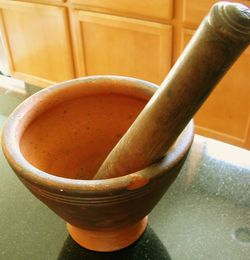
A large, deep mortar called a khok is used for pounding tam mak hung and other foods, and is indispensable in the Lao kitchen.
Ingredients
- galangal (ຂ່າ, khaa): typically used in soups, mixed dishes and marinades
- kaffir lime (ໝາກຂີ້ຫູດ, maak-khii-huut): typically used in soups and stews
- shallots
- shredded papaya (ໝາກຫຸ່ງ, maak-hung): used in spicy papaya salad
- lemon grass (ຫົວສິງໄຄ, hua sing-khai): used in soups, stews and marinades
- tamarind (ໝາກຂາມ, maak-khaam): used in soups
- tamarind leaf: used in soups
- cha-om (acacia): used in soups, curries, omelettes, and stir-fries
- coriander (cilantro)
- hot pepper: seven popular types
- Thai basil: eaten raw with pho
- mint: used in goy/laap, and eaten raw
- dill: used in stews and eaten raw
- lemon basil: used in soups and stews
- garlic (ຜັກທຽມ, phak-thiam)
- ginger (ຂີງ, khiing)
- banana flower: typically eaten raw in vermicelli soups
- ginger flower
- bamboo shoot: used in stews or boiled as a side dish
- rattan shoot: typically in stews (bitter)
- shiitake mushroom: used in soups
- wood ear mushroom (called "cat ear" in Vietnamese): used in egg rolls and soups
- yanang leaf : used to color (green) and flavor stews
- mak kheua poy: green and white striped eggplant, used in stews or eaten raw
- mak kheng: "pea eggplant," typically used in stews
- yard long beans: eaten raw, in stews, and can be made into a spicy bean salad(tam mak thoua)
- phak kadao: (neem), a bitter green, eaten raw
- phak lin may: a bitter green, eaten raw
- phak ileut: a green, eaten raw (this is probably betel leaf)
- dok khae: flower of Sesbania grandiflora (bitter)
- phak bong: ipomoea aquatica, stir fried or eaten raw
- nam pa: clear fish sauce (Thai nam pla)
- padek: Lao-style fish sauce
- "three-layer pork": pork belly
- dried water buffalo skin: used in jaew bong and stews
- sa khan: stem of Piper ribesioides, used in stews
- kaipen: river algae sheets
Read more at Wikipedia.org