Body Piercing
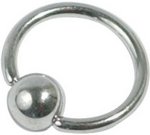
Body piercing usually refers to the piercing of a part of the human body for the purpose of wearing jewelry in the opening created. Body piercing is a form of body modification. more...
The word "piercing" can refer to the act or practice of body piercing, or to a specific pierced opening in the body.
Some people practice piercing for religious or other cultural reasons, while many individuals, particularly in the modern West, choose to be pierced for spiritual, ornamental, or sexual reasons.
In ancient times
Evidence suggests that body piercing (including ear piercing) has been practiced by peoples all over the world from ancient times. Mummified bodies with piercings have been discovered, including the oldest mummified body discovered to date, which was found in an Austrian glacier. This mummy had an ear piercing 7–11 mm in diameter.
Nose piercing and ear piercing are mentioned in the Bible. In Genesis 24:22 Abraham's servant gave an ear ring and bracelets to Rebekah, wife of his son Isaac. Nose piercing has been common in India since the 16th century. Tongue piercing was popular with the elite of Aztec and Maya civilization, though it was carried out as part of a blood ritual and such piercings were not intended to be permanent. Ancient Mesoamericans wore jewelry in their ears, noses, and lower lips, and such decorations continue to be popular amongst indigenous peoples in these regions.
Body piercing folklore
Many contemporary authors and body piercing enthusiasts have made attempts to explain the history or development of body piercing in Western Culture, prior to its contemporary practice. In Dreamtime by Hans Peter Duerr, he claims that nipple piercing became popular in 14th century Europe. There is evidence, both anecdotal and photographic, that nipple piercing was practiced in Europe during the late 19th century and in the early 20th centruty, but it was not consiedered to be a common practice. It is sometimes claimed that Roman centurions practiced nipple piercing and that soldiers attached their capes to the piercings. This is however, not true, their capes were actually attached to the breastplate of their armor. This particular myth owes its popularity to Doug Malloy, an American piercing pioneer who published pamphlets in the late 1970's promoting his highly fanciful histories of body piercing.
Read more at Wikipedia.org