MiniDisc Players
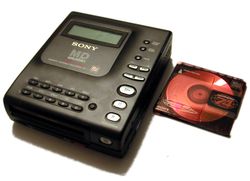
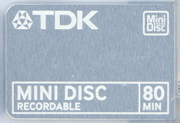
A MiniDisc (MD) is a disc-based data storage device for storing any kind of data, usually audio. The technology was announced by Sony in 1991 and introduced January 12, 1992. more...
Market history
Along with Philips and Matsushita' Digital Compact Cassette (DCC) system, the MiniDisc was targeted as a replacement for analogue cassette tapes as the recording system for Hi-Fi equipment but, as a consumer format, MiniDisc has met with only limited success, though it has enjoyed a loyal niche following in some circles. It did not catch on in the US and Europe as well as Sony had hoped; in Japan, it is still relatively popular, though quickly being replaced by flash and HDD-based audio players like Apple's iPod. The low initial uptake of the format was attributed to the small number of pre-recorded albums available on MD as a relatively small number of publishers embraced the format. The initial high cost of equipment was also a factor. The pre-recorded disks disappeared from the market rather suddenly - coincidentally, once the cost of a blank disc plus the cost of the compact disc version became less than the cost of the equivalent pre-recorded minidisc.
The company avoided the mistake that it had made in the 1970s with the Betamax video recording system, and this time licensed the MD technology to other manufacturers, with JVC, Sharp, Pioneer, Panasonic and others all producing their own MD systems. In recent years MiniDisc has faced new competition from CD-Recordable, solid-state memory recording (flash memory), and hard disk recording, while the popularity of traditional cassette tape refuses to wane in certain quarters. MiniDisc is widely respected as being a very reliable format when it comes to portable audio storage, such as field recording.
MD Data
MD Data, a version for storing computer data was announced by Sony in 1993, but it never gained significant ground, so today MDs are used primarily for audio storage. The format was able to store 140MB on a special disc, but was plagued by low write speeds and slow seek times. MD Data drives also could not write to audio-MD's, only the considerably more expensive data blanks. MD-Data2 blanks, which held 650MB of data, were introduced around 1997, but were only used in Sony's short-lived MD-based camcorder.
Read more at Wikipedia.org